
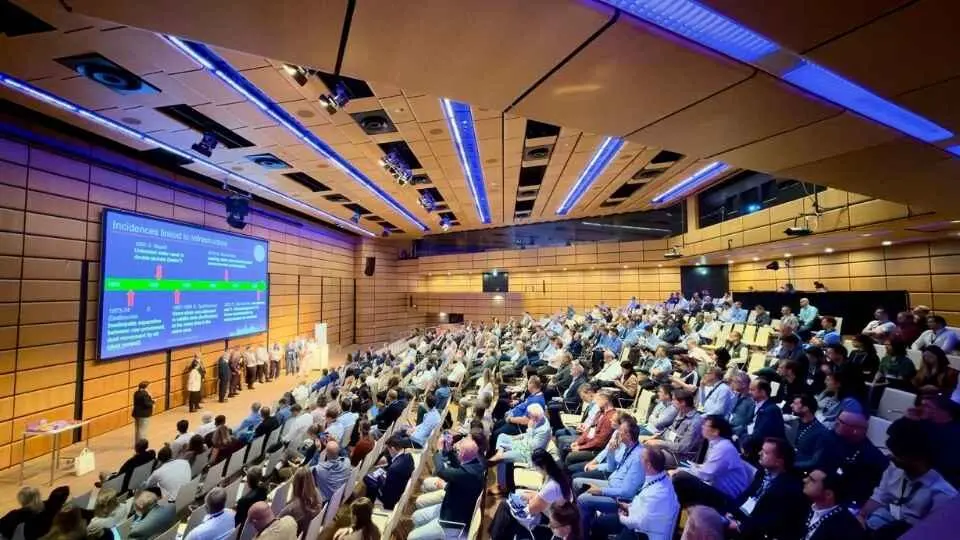
The 2026 EHEDG World Congress in Vienna brought together participants to exchange insights into one of the food safety industry’s most important foundations: hygienic design.
While many sessions focused on technical innovations and engineering solutions, a broader theme emerged throughout Congress. Hygienic design is not only an engineering discipline. It is also, and increasingly, a management-system discipline.
For auditors, this shift raises an important question: what exactly are we trying to verify during a hygienic design audit?
World of Auditing moderated a roundtable that brought together representatives from industry, certification bodies, and scheme owners to discuss how audits can verify the effectiveness of hygienic design as a HACCP prerequisite program.
A reflection used to frame the discussion captured the challenge well:
“If hygienic design is not built into the management system, into the way we specify, procure, and manage equipment and infrastructure, we are simply auditing problems we have already created.”
The statement challenges a common assumption: hygienic design discussions often focus on physical assets: machines, conveyors, production lines, or processing environments. Yet failures often arise from planning, procurement, engineering, installation, maintenance, or change-management decisions. By the time an auditor finds a shop-floor problem, its root cause may be embedded in organizational processes and decisions.
This realization was evident throughout the panel discussion and Congress. Organizations increasingly recognize that hygienic design cannot be treated as a stand-alone technical requirement. It must be integrated into the way projects are managed, investments are approved, suppliers are selected, equipment is specified, and assets are maintained throughout their lifecycle.
The implications for auditing are significant.
If hygienic design is achieved through a series of organizational processes, then auditors should look beyond the condition of individual assets and seek evidence that those processes are effective. The most valuable audits are not those that simply identify a poorly designed component. They reveal whether the organization consistently prevents such issues from being introduced in the first place.
This distinction also helps address another theme that emerged repeatedly in Vienna: the difference between compliance and effectiveness.
Many organizations can demonstrate policies, standards, procedures, and approval processes. However, this does not automatically mean hygienic design is effective. Equipment may still be difficult to clean. Modifications may still be required after installation. Similar design weaknesses may reappear from one project to the next.
The more meaningful question, therefore, is not whether hygienic design requirements exist and are adhered to, but whether they produce the intended outcomes.
Evidence of effectiveness often appears in microbiological trends, maintenance interventions, CAPA data, project reviews, and lessons learned from prior investments. When these sources tell a consistent story of risk reduction and continuous improvement, auditors gain a far more reliable picture of effectiveness than documentation alone can provide.
The discussion also explored an uncomfortable reality: audits can sometimes create false assurance.
An audit report may create confidence that hygienic design risks are adequately managed, even when critical weaknesses remain. This happens when auditors rely too heavily on procedures and records, with insufficient field verification and no clear sense of what good looks like. It can happen when audit sampling misses the most significant risks, or when auditors accept controls without evidence they work in practice.
The challenge is not simply to collect evidence. The challenge is to collect the right evidence.
This requires a risk-based approach. Auditors cannot inspect every asset, review every project, or verify every design decision. Their value lies in identifying where hygienic-design failures pose the greatest food-safety risk and directing attention accordingly.
Another important topic discussed at the roundtable was the reality of legacy infrastructure. While new projects can often be designed to modern hygienic-design principles, many organizations still operate facilities and equipment built to earlier standards and expectations.
In these situations, auditors must avoid simplistic conclusions. The objective is not to compare every legacy asset to an ideal future state. Instead, auditors should assess whether risks are understood, improvement priorities are clearly defined, and effective controls are in place until redesign or replacement becomes feasible.
Ultimately, the discussions in Vienna pointed toward a broader evolution of the auditing profession. Auditing hygienic design is becoming increasingly multidisciplinary. Future auditors will need to understand not only hygienic-design principles but also project management, procurement processes, risk management, maintenance strategies, operational performance, and organizational learning.
The future of hygienic-design auditing is therefore not about developing longer checklists. It is about asking better questions.
Questions that challenge whether hygienic design is embedded throughout the organization.
Questions that distinguish compliance from effectiveness.
And questions that help organizations move from confidence on paper to confidence in practice.
That may well be the most important lesson. The real value of auditing hygienic design is not just confirming that requirements exist and are followed. It is determining whether the organization’s systems, decisions, and behaviors consistently deliver the food-safety outcomes those requirements were designed to achieve.